Monday, March 17, 2008

The blog has been napping

...but just a post to let you know I'm alive.

Over the weekend, I traveled with some friends to Mindo, a pueblo about 2.5 hours from here. It was a fabulous break from the city. We took hikes to/around waterfalls and took several swims (what tranquility! I decided I must live by a waterfall at some point in my life); flew high in the sky, via harness and cable, over awesome views of the forest scenery; saw some beautiful butterflies and hummingbirds in flight; and tore through the muddy abyss that is Mindo on ATVs, aka four-wheelers. What fun!

Now it's back to school for just three days; Thursday begins our spring break. We leave on Thursday morning for the Galapagos! I'll be there until Tuesday, when some friends and I will fly back to southern mainland Ecuador and take our time traveling back up towards Quito, stopping at some cool spots along the way.

I'll leave you with two distinct views from Quito:

Nighttime view from church's rooftop in the Historical Center of Quito

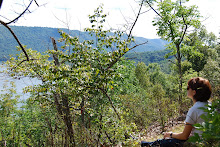
View from a hilltop behind a house in south Quito, with the cloud-covered city stretching behind it

Tuesday, March 4, 2008

Update: Ecuador-Colombia dispute

To all those who expressed their concern about the current situation here: Thanks. Truly, we are safe in Quito (about 150 miles away from where the incident occurred), and in all probability the situation is purely political and will not escalate further.

To update on the situation:

President of Ecuador Rafael Correa has sent 3,200 troops from the Ecuadorian military to the Colombian border, but it seems this is more symbolic than a military move.

As a result of the incident, Ecuador has broken all diplomatic relations with Colombia, closing the Colombian embassy in Ecuador and bringing Ecuadorian representatives home from its embassy in Colombia.

Correa has also started a "diplomatic offensive" with Venezuela, Peru, Brazil, Panama and the Dominican Republic, against the Colombian government for its violation of other nation's sovereignty.

Relations between Colombia and the rest of Latin America had already been tenuous because of Colombia's relations with and receipt of aid from the US government. This all is just isolating Colombia ever more from its neighboring countries.

Sunday, March 2, 2008

Ecuador affected by Colombian anti-rebel fighting

A break from my more light-hearted posts to share this noticia (news) from Ecuador:

In a severe blow to the Colombian rebel group FARC (the Revolutionary Armed Forces of Colombia), the Colombian military launched an attack early today that killed the second-highest ranking FARC commander, Raúl Reyes, and 16 other FARC rebels.

The attack occurred in the southern-most part of Colombia, just on the Ecuadorian border. The fighting spilled over into Ecuador, where the FARC unit was stationed, and where the bodies of Reyes and others were found. Colombian military planes also violated Ecuadorian airspace.

Tonight, my host family and I have been listening to the TV news coverage of this event, which carries great weight for Ecuador. Ecuadorian President Rafael Correa just delivered a speech asserting that Ecuador's sovereignty had been threatened by the Colombian fighting within its borders. In response, President Alvaro Uribe of Colombia has just delivered an apology to Ecuador for the event.

President Hugo Chavéz of Venezuela, which has also been affected by FARC fighting in the past, announced that if a similar event occurred within Venezuela's borders, it would spark a war.

"President Uribe, think about it long and hard. You had better not get the idea of doing this on our territory because it would be a 'causus belli', cause for a war," President Chavez said in his first reaction to the raid." (CNN.com)


Correa sent troops from Quito to investigate in northern Ecuador, where the fighting had occurred, and they found a permanent FARC station containing food and arms for over 200 people. It is still unclear if the Ecuadorian government knew that this camp was there.

I'm sure we'll continue to hear more about this in the coming week, so I'll keep you all updated as things occur.

Thursday, February 28, 2008

The Amazon, part 4: Monkeys

Just before getting on the boat in Coca to go to Yachana, we got some up-close-and-personal time with two monkeys. They were hanging out in a restaurant by the dock. They were adorable!
Mira (look):


The Amazon, part 3: Fear Factor, Amazon style


These are larvae of the palm weevil, an indigenous Amazonian delicacy.

WARNING: This is about to get kinda nasty. Don't read on if you have a weak stomach!

I ate one. Alive. I bit off its head (that little reddish thing) and popped back the rest. Not gonna lie - it squirmed at first. Actually, it was less of a squirm and more of a pulse; you can imagine it, that creepy looking wave of movement down a legless insect's body.

The question I anticipate from you is...WHY!? Why on earth would I eat such a thing!? Well, before we got to the Amazon, Jesse (one of the guys in our group) told me he'd heard that the Amazon is home to large, lemon-flavored ants that we'd possibly have the opportunity to try. I really wanted to eat something crazy and memorable, and so Jesse and I were all for dining on the ants. But they fell through - apparently, these ants live in a scarce tree which must be cut open to harvest the ants, which we weren't about doing. I had given up my hope to eat a cool bug.

And then, something amazing happened. Our group was receiving a "cooking lesson" at Yachana, where we learned how to prepare heart of palm, yucca, telapia, and stinging nettle salad. All was well and happy, and then: the guide brought out a large palm leaf folded around its contents. He asked us to guess what was inside, and but none of us expected to find what was there - those little creatures pictured above. And then he randomly pointed to Jesse and said, "Okay, come eat one."

Jesse about flipped. But he'd been challenged, so he agreed. And then I knew what I had to do. We watched the guide demonstrate how to eat the larvae, and then it was our turn. The weevil-eating group grew to six -- five of the six guys in our group, and me. On the count of three, we made the collective chomp.

Truthfully, it didn't really taste like much. But the texture, and the body wave...it was almost too much to handle. But I kept it down.

Our encore was salted weevil larvae on a skewer, roasted over the fire. Crunchy and delicious, this version of the larvae seriously tasted like bacon. I went for seconds.

Monday, February 18, 2008

The Amazon, part 2: In the jungle

Our first night in the Amazon, we slipped on our headlamps and went out on a guided night hike to see what we could see. Nighttime is prime-time for insect viewing, so we saw a lottt of large spiders and other creepy things. But we also saw a poison dart frog and a small, non-venomous snake.

Here's a peek:


The next morning, we took a 4-hour trek through the jungle, led by one of the guides from Yachana. Honestly, it didn't satisfy my thirst for the jungle! We were on trails in the forest around the lodge, so it didn't have that romantic feeling of being deep in the Amazon. Nonetheless, we saw lots of cool stuff, including two species of monkeys, some interesting tropical birds, more large insects, and unique flora.

The trees were what stuck out to me, not only because they were really tall, but also because of their adaptive root structures. Below the shallow layer of decomposing materials on the forest floor, the ground is basically clay that roots don't dig. So, the trees have visible roots spreading across the ground's surface, where their fuel is. And some of the trees were just SO huge, in height and girth, since they are like 400 years old.

Our guide also taught us how to make string out of the fibers inside a palm leaf, which I thought was awesome. It involved stripping off the outer, dark green layer of the palm, which leaves you with the fibers. Then you roll the fibers into one string, which then you twist and roll into another string of fibers. You're left with a perfect little string. We all made them and are wearing them around our wrists.

Our group split into two for these treks through the jungle, and apparently the other guide stopped in the middle of the jungle, grabbed some palm leaves, and began making a basket right there on the forest floor. I love it.

The Amazon, part 1: Yachana

My post about the Amazon is long overdue, and for that I apologize. So let's get right into it, eh?

We spent a wonderful 4-day weekend in the north of the Oriente, which refers to the whole eastern portion of Ecuador that is the Amazon Rainforest. [Ecuador is divided into three major regions: la Costa, which is the whole western part of Ecuador that greets the Pacific ocean; la Sierra, the mountainous middle range, where Quito is located; and el Oriente, aka jungle, to the east. Ecuador is pretty small, but has an incredibly amount of biodiversity. This fact has lots to do with these three distinct environments located in a small area that makes up Ecuador. Cool, right?]

To get to the jungle, we took a 45-min. flight from Quito to Coca, one of the biggest/most developed areas in the Oriente. Then from Coca, we took a 3-hour motorized canoe ride up Rio Napo, one of the Amazon River's tributaries, to the place where we stayed, a little eco-tourism project called Yachana, which in Quichua, the indigenous language, means "to learn."

I had been pretty skeptical about the whole "eco-tourism" idea...I mean, isn't that an oxymoron? But Yachana was a super-interesting operation that helped me to see eco-tourism for what it should be. The fundamental idea of eco-tourism is this: sustainable tourism that doesn't pollute/degrade/hurt the environment, where a majority of proceeds go back to local communities and towards other responsible purchases. In the case of Yachana, the founders continue to buy areas of Amazon forest to conserve it, so it doesn't get chopped down or abused. They also started a chocolate business, where the chocolate beans are purchased at fair trade prices from over 5,000 cacao farmers in the Amazon region. Earnings from this go back into other Yachana projects, like the technical school they run for high schoolers, who graduate with a diploma in Eco-Tourism and Sustainable Development. They learn practical skills in artistry (jewelry making, weaving, silk-screening), agriculture (growing veggies; rearing chickens, pigs, etc.; cultivating fish), business (selling water filtration units), and other cool stuff. Part of our stay there was touring the high school and learning about what they're learning.

The bottom line belief Yachana is that the future health of the Amazon forest region and the well-being of its inhabitants are inextricably linked. And, the young generation represents the future of the region. So, the education and community-building initiatives are working simultaneously to protect the Amazon, too. Dynamic.
An interesting thing to note is that the owner of the Yachana Foundation is an American, who used to work for an oil company in the Amazon (I want to say Texaco, but I'm not positive). He saw the destruction his business was doing to the region and to the people, and essentially "saw the light." So he started the Yachana project. I really wanted it all to be the brainchild of a local Ecuadorian and was kinda bummed to know it wasn't. The whole thing really does have "American business plan" written all over it. But it's great to see it used for good. And, one of the long-time Ecuadorian tour guides at the Lodge has plans to start his own, similar foundation in his hometown in another part of the Amazon.

Oh, and I gotta mention the FOOD at this place. It was...Amazing. Every meal, we ate like it was our last, just because the food was so delicious... chicken curry, Tilapia, leafy green salads, fresh fruits, a traditional Ecuadorian breakfast, American pancakes, delicious desert - made as much as possible with local ingredients. Heaven on a plate, every meal. And, we were served the Yachana chocolate every day in one form or another - in a rich chocolate sauce we could put on fruit, bread, in milk, or in choconibs to munch on after a meal. Mmmmmmmmmm.

Okay. That's Yachana. Next posts will be about the stuff we did there, including treks through the jungle, a night hike, a visit to a local curandero (like a Shaman), floating with the current down Rio Napo, eating live weevil larvae, eating cooked weevil larvae, playing Ecuavolley with locals, seeing locals pan for gold...and more.